

The Evolving Landscape of SUD Treatment
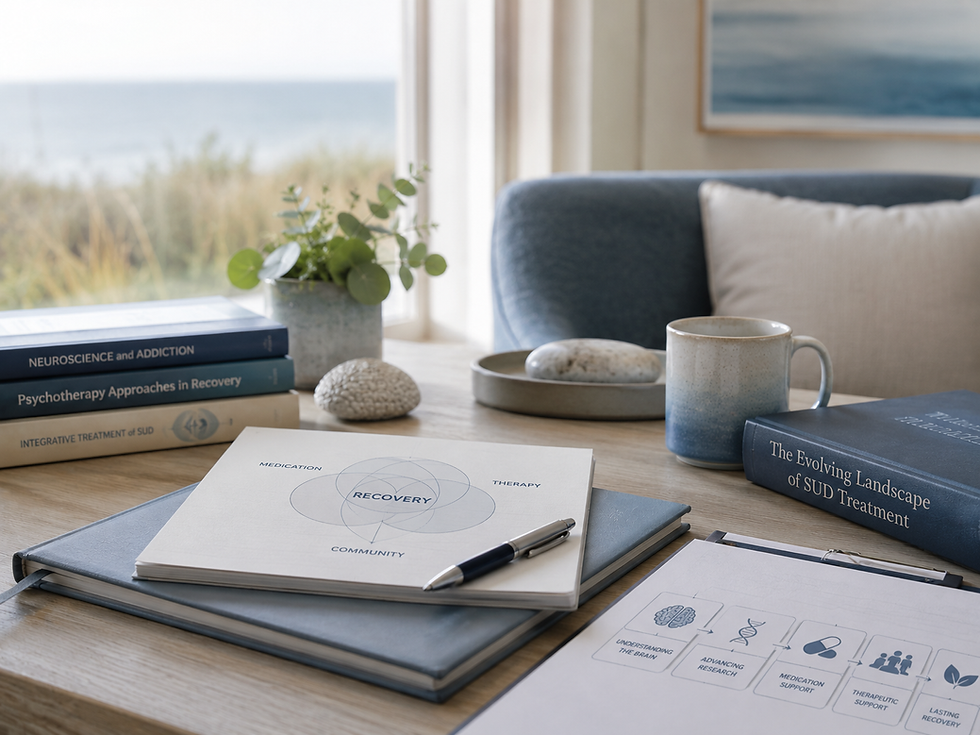
Substance Use Disorders (SUDs) are complex illnesses, but they are treatable. While many are familiar with "front-line" medications like Naloxone (Narcan) for overdose reversal or Buprenorphine (Suboxone, Sublocade, Brixadi) for opioid dependence, there is an entire toolkit of other medications used to support recovery.
At Seafield, we utilize a variety of established pharmaceuticals that have been safely used for years to treat other conditions but are now proving invaluable for SUDs: Below are the main ones used but there are others.
Gabapentin: Originally for nerve pain and seizures, it helps stabilize nerve transmission and can reduce cravings or anxiety in early recovery.
SSRIs (e.g., Zoloft/Sertraline): These help manage the underlying depression and anxiety that often co-occur with or trigger substance use.
Anti-hypertensives (e.g., Clonidine): Useful for managing the physical "fight or flight" symptoms of withdrawal, such as racing heart and agitation.
Baclofen and Topiramate have been used for alcohol use disorder, cocaine use and binge eating
Benzodiazepines (e.g., Valium, Ativan): We use these strictly for short-term withdrawal assistance (detox). Because they can be highly addictive, we avoid long-term use. This is especially critical for those with Alcohol Use Disorder, as "benzos" and alcohol affect the brain in similar ways.
The "New Frontier" of Research
We are also keeping a close eye on emerging research. There is significant excitement around GLP-1 medications (originally for diabetes and weight loss). Recent studies in early 2026 suggest they may "quiet the noise" of cravings by targeting the brain's reward centers. While it is still too early to confirm long-term outcomes for SUD specifically, the preliminary data is promising.
The Human Element
Medication is a powerful tool, but it isn't the whole story. The psychosocial approach remains the bedrock of lasting recovery.
Cognitive Behavioral Therapy (CBT) helps patients rewire thought patterns without pharmaceuticals.
Group meetings and peer support provide the community connection that medicine cannot replicate.
Every patient presents differently, and at Seafield, we believe the best approach is a tailored combination of the most effective medical and psychological tools available.


Learning about 10.0.0.1 can give beginners a better understanding of local router interfaces. I appreciate articles that explain each step clearly because they make configuration topics less intimidating and easier to follow.
Having seen the pull of compulsive behavior up close on https://casinosirumobile.com, the part about Gabapentin reducing cravings really hit home. It's easy to think of addiction as purely psychological, but knowing there are established meds that address the physical side feels like a missing piece. That contrast between the medical toolkit and the human work of CBT is something I'll remember.
The literary community known as 笔群 offers an extensive feed of short stories and personal notes from various contributors.
When the administration page refuses to open, 10.0.0.1 admin login not working can become frustrating. A useful troubleshooting guide should cover simple checks such as network connectivity, browser issues, correct IP formatting, and whether the device is actually connected to the relevant router.
পোস্টটি পড়ে বিষয়টি সম্পর্কে বেশ ভালো ধারণা পাওয়া গেল। তথ্যগুলো সহজভাবে সাজানো হয়েছে বলে পুরো বিষয়টি বুঝতে সুবিধা হয়েছে। বিশেষ করে যারা নতুন করে jaya9 সম্পর্কে জানতে চাইছেন, তাদের জন্য এই ধরনের বিস্তারিত আলোচনা বেশ কার্যকর হতে পারে। এমন তথ্যপূর্ণ লেখা সত্যিই ভালো লেগেছে।